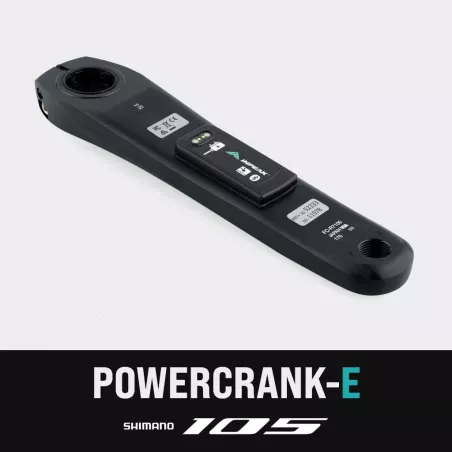
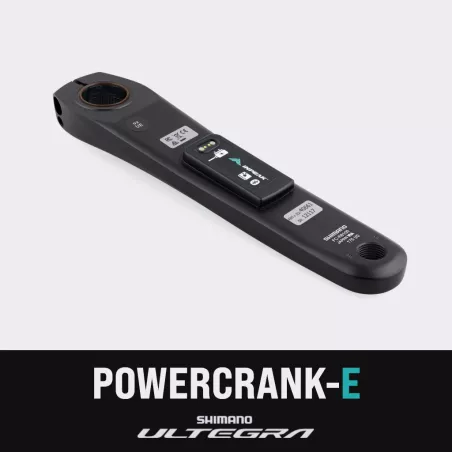
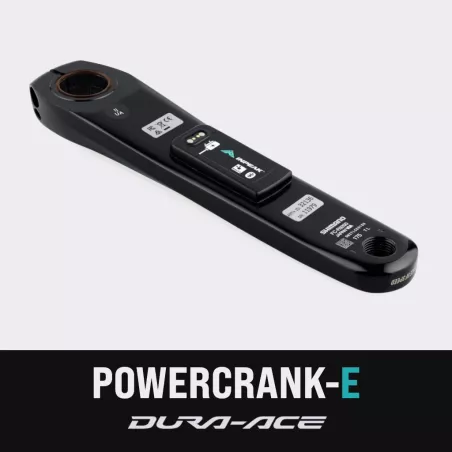
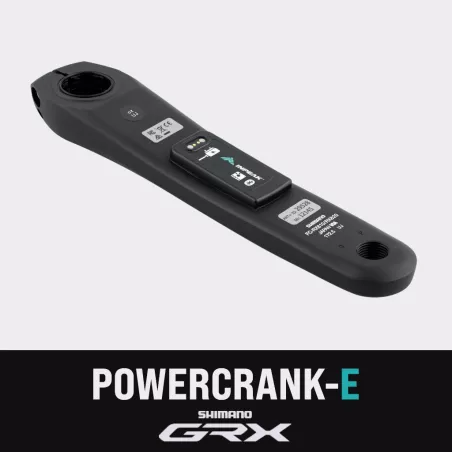

Rotor INspider 2.0 power meter on Aldhu Carbon crankset, Look road bike, Ultegra 8150 — how to use a power meter
Measure effort, structure training, and pace smarter: the role of a power meter on the road.

Power meters: how to use them based on your rider profile

You keep hearing about “watts” in races and wonder if a power meter is actually useful for you? Maybe you already use a GPS head unit and chase Strava segments… but you still miss an objective measure of effort.

Why this guide?
This page starts beginner-friendly and becomes progressively more technical. The goal: understand why a power meter matters, avoid common mistakes, and learn how to use it to progress at any level—leisure, gran fondo, road racing, even elite.

1) Start simple: show live watts on your head unit

You don’t need to be an expert. Many riders begin by simply watching live power on a Garmin or Wahoo— super helpful on climbs, in crosswinds, or to avoid going too hard too soon.

Solid entry options: Rotor INpower or single-sided pedal systems like Assioma Uno.

Velo-Perso advice
Begin simple with a reliable unit. For a long-term investment, choose a modular, dual-sided platform so you can later change crank length and chainring sizes without replacing everything.

2) Analyse your rides afterwards

Instead of only looking at speed or elevation, study your watts. Tools like Strava, TrainingPeaks, or Golden Cheetah help you estimate FTP, track zones, and follow progression.

You’ll pinpoint strengths/weaknesses and avoid training drift: rides that are too easy to improve or too hard to recover.

Velo-Perso advice
FTP structures everything (sessions, thresholds, goals). Use auto-estimation or a 20′ test. In traditional road racing, MAP ~ 5-minute power is often more decisive due to surges. We’ve analysed power data for 15 years: real progress comes from consistent reading of your files, not a single test.

3) Structure your training

Once zones are set, plan your weeks: endurance (Z2), threshold (Z4), VO₂max/MAP (Z5). Platforms like TrainingPeaks or Today’s Plan make it easy to run proper cycles.

Velo-Perso advice
Better to train 6 focused hours than 12 random hours. Power is perfect to optimize limited time (work, family, weather, fatigue). Always align goals with your training bandwidth, health status, age, and any injury history.

4) Use power in events: fondos, triathlon, crits

Your power meter becomes a pacing guide for climbs, surges, and false flats. On long challenges— L’Étape du Tour (many English-speaking riders attend), La Marmotte, Ironman—more and more athletes pace the whole day by power. In the US, it’s also invaluable in criteriums; in the UK, think National Hill Climb pacing.

Concrete example
On an Étape du Tour with three major climbs: riding them at 240 W → 200 W → 160 W will be slower than holding a steady 200 W on each climb. A power meter helps you avoid the bonk. If you underestimate your level, you can still lift the pace and finish on feel; start too hard without power, and you’ll lose time (and fun) in the final hour.
Road racing
Power helps you avoid over-doing pulls that cost you the finale. Use your targets to stay in the right band when the bunch is nervous and heart-rate lags.

After a year or more, if you want tangible gains (weight, ergonomics, robust dual-sided accuracy), consider Rotor INspider 2.0 on Aldhu Carbon cranks.

5) Track multi-year progression

Experienced athletes correlate power with nutrition, sleep, altitude, and seasons. Over the long run, data becomes decisive.

MAP: career benchmarks
CategoryReference MAP
Youth (U17)~ 400 W
Junior (U19)~ 460 W
U23~ 500 W

At elite level, a power meter may reveal a ceiling… but it’s also a powerful detection tool.

Comeback faster

A meter can be “disappointing” after a break (e.g., −20% MAP). The good news: regaining a former level is much faster than reaching a brand-new one. At any age, a few focused, well-calibrated weeks can bring back excellent sensations.

Dual-sided systems (e.g., Rotor 2INpower SL or Assioma Duo) help monitor left/right balance and refine fit. You can even follow your VO₂max over time with regular ride data.

Velo-Perso advice
We’ve been working with power data since 2009. We know the strengths (objectivity, load control, form detection) and limits (day-to-day variability, weather, fatigue, mis-calibration). The key isn’t daily perfection but consistency in measurement and long-term reading.

What kind of rider are you?

Appendix — Coggan Power Profile (W/kg): how to read it

Andrew Coggan’s Power Profile ranks performance in W/kg by effort duration. The chart has separate Men and Women columns: pick the right column, then locate your level for each duration. It’s normal not to fall into the same category everywhere.

Coggan Power Profile (W/kg) — Men & Women: 5 s, 1 min, 5 min, FTP/20 min
Illustration: Power Profile in W/kg. Use the Men or Women column accordingly.
What each duration measures
  • 5 s: neuromuscular peak / pure sprint.
  • 1 min: anaerobic capacity (lactate tolerance).
  • 5 min: maximal aerobic power (VO₂max / MAP).
  • 20 min ≈ FTP: threshold power, key for climbs/TT pacing.
Place yourself in 4 steps
  1. Collect your best 5 s / 1 min / 5 min / 20 min from Strava, Garmin Connect, or a dedicated tool (e.g. Golden Cheetah; see our VO₂max page).
  2. Convert to W/kg (watts ÷ current body mass).
  3. Locate each value in the table (Men/Women column).
  4. Interpret your profile (strengths/weaknesses) rather than chasing a single rank.
Interpretation & common cases
  • Don’t expect to match one category at all durations—this is rare.
  • Regional sprinter: elite-level 5-second power, but “club” 20-minute power.
  • Climber: WorldTour-level 20-minute power but modest 5-second peak.
  • The goal is to identify your specialities and train what matters for your events.
Caveats
  • Values are personal bests, often from targeted efforts (Strava KOM, sprint session, 5-min or 20-min tests).
  • They vary with heat, altitude, fatigue, calibration, and indoor/outdoor conditions.
  • Don’t test all durations in one day: a true all-out 5-minute effort is brutal and will depress your 20-minute result. Spread tests over several sessions.
  • The protocol is flexible: use your historical power curve (Strava, Garmin, Golden Cheetah) and compare over weeks.

Go deeper: Understand VO₂max on the bike2025 power-meter comparisonAll our power meters.

Velo-Perso advice
We’ve analysed power files since 2009. The key isn’t day-to-day perfection but consistency of measurement and long-term reading. Align goals with training time, health, age, and any injuries—this is how the Coggan table becomes a progression tool, not a verdict.

FAQ — Power meters

Why use a power meter if I already track heart rate?

Power measures the actual external effort instantly, while heart rate lags and is influenced by heat, caffeine, stress, etc. They are complementary: power to pace, HR to monitor internal load.

How can I estimate FTP without a lab test?

Use your best 20-minute effort and take ~95% as an FTP proxy, or rely on auto-estimates (Garmin/Strava/TrainingPeaks). Calibrate your meter and ensure good cooling if testing indoors.

What’s the difference between FTP and MAP/VO₂max power?

MAP (~best 5-minute power) reflects maximal aerobic power. FTP is threshold power sustainable for ~40–60 minutes. Both are used to structure zones: Z2/Z3 endurance, Z4 threshold, Z5 around MAP.

My watts differ indoors vs outdoors — is that normal?

Yes. Cooling, trainer inertia, position and calibration can create a few-percent gap. Be consistent: compare sessions in the same context and calibrate regularly.

Should I do a zero-offset before every ride?

Recommended: perform a zero-offset after 5–10 minutes of warm-up, keep firmware/battery healthy, avoid big temperature shocks, and maintain a clean drivetrain to reduce measurement noise.

Single-sided vs dual-sided — which should I pick?

Single-sided (left only or Uno pedals) is great to start and to track training load. Dual-sided improves left/right symmetry insight and accuracy — useful when progressing or after injury. See our 2025 comparison.

How should I pace a long gran fondo or triathlon?

Target a steady intensity instead of going out too hard. Example: holding ~200 W on three climbs is faster than doing 240 → 200 → 160 W. Power helps avoid the late bonk and keeps pacing smooth.

How do I read the Coggan power profile (W/kg)?

Collect your best 5 s / 1 min / 5 min / 20 min in W/kg (Strava, Garmin, Golden Cheetah). Place each value in the Men/Women column. Don’t chase one identical category across all durations — the goal is to understand your profile (sprinter, puncheur, climber). See the Coggan appendix above.

After a break, how fast can I get back to form?

Regaining a former level is usually faster than reaching a brand-new one. With 3–5 well-structured sessions/week, many riders return to familiar numbers in ~3–6 weeks (varies with age, load, history).

Which type is most practical if I change bikes often?

Pedal-based meters are the most transferable. Modular spider systems offer precision and multi-ring/crank compatibility for long-term builds (e.g., INspider 2.0). For a broad view: all our power meters.